Core Stability, Rotation Power and Rotation Control
In my last blog we started discussing the importance of thoracic mobility and core strength in athletics; specifically we looked into the importance of the thoracic mobility part of the equation. Now it’s time to talk about the other half: core stability.
Core stability is important for trunk rotational power and control. Power is needed for propulsion and movement through the trunk, but that power and movement also need to be controlled to avoid the force from spilling into unintended surrounding tissues.
Go back to the golfer example from our previous blog. You, the golfer, are all lined up for the first hit from the tee – feet apart, elbows tucked in, trunk leaning forward. You go into a back swing, then propel forward. In order to hit the ball as far as you can, you need rotational power. Once you strike the ball and begin moving into follow through, you need control to begin slowing down the movement.
So, how are power and control achieved? Specific core training that involves isolated movements then progresses into combined (light) and combined (powerful).
Let’s get into some examples:
Isolated - Anti-rotation
Pallof press (variations videos below)
Overhead Abs
Lumbar/Glute Extension
Stationary
Walk Outs
Stirs
Press Out & Up
Weighted
Overhead Abs
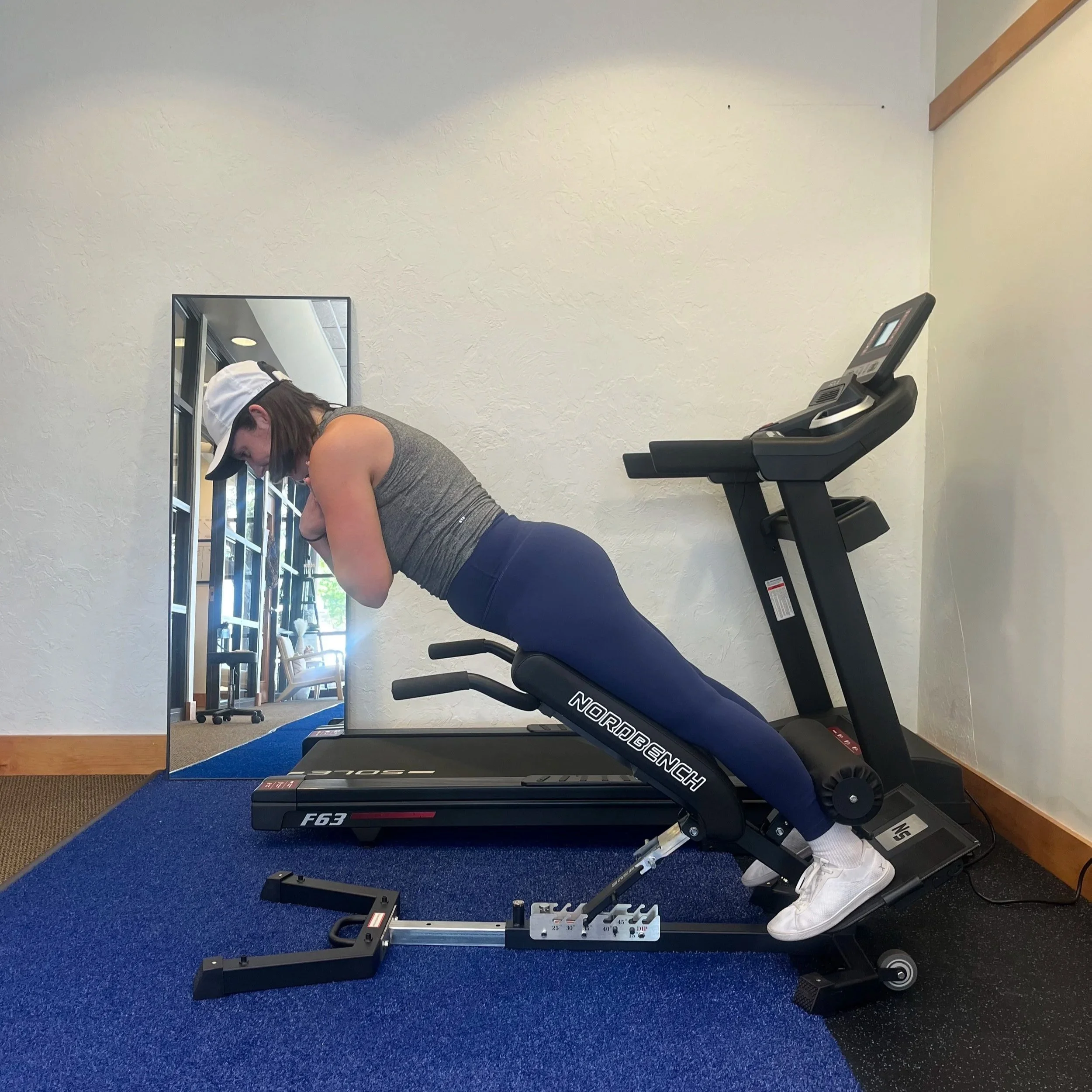
Lumbar/Glute Extension
2. Combined (light) —> Video Variations Below
Pallof Press with Rotation
Resisted Diagonals/Woodchoppers
Side plank/Copenhagen with Opposing Arm/Leg
Pallof with rotation
Resisted diagonals - woodchoppers
Side plank/copenhagen with opposing arm/leg
3. Combined (powerful)
Medball/Weighted ball rotation/wall toss
*Tidal tank
Medball/Weighted ball rotation/wall toss
*Tidal tank